
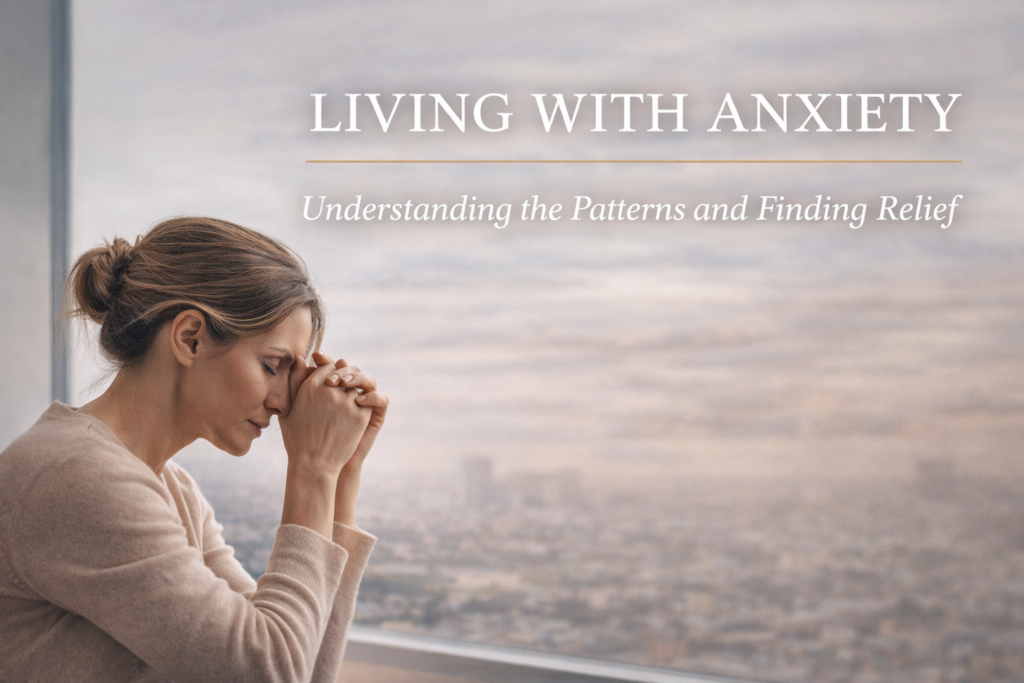
Anxiety doesn’t always announce itself in obvious ways. Sometimes it shows up as persistent worry that loops through your mind, keeping you awake at night or making it hard to focus during the day. Other times, it surfaces as physical tension, racing thoughts, or an overwhelming urge to avoid situations that once felt manageable. When anxiety begins to limit your life, shaping your decisions, your relationships, and your sense of control, therapy can help you understand the patterns driving it and develop new ways to respond.
At Dr. Karen Kaffko & Associates, we provide anxiety therapy for people living in Toronto or anywhere in Ontario. It is grounded in evidence-based approaches that address both the emotional and cognitive dimensions of anxiety. Our collaborative psychotherapy practice brings together extensive clinical experience in treating anxiety disorders, helping clients move from feeling stuck in their anxiety to feeling equipped to navigate it.
Understanding Anxiety and When It Becomes a Problem
Anxiety is a natural human response to uncertainty or perceived threat. In small doses, it can sharpen your focus and prepare you to respond to challenges. But when anxiety becomes chronic or disproportionate to the situation, it can shift from a helpful signal into a persistent barrier.
Common signs that anxiety may warrant professional support include:
- Excessive worrying that feels difficult to control, even when you know it’s out of proportion
- Physical symptoms like muscle tension, restlessness, fatigue, or sleep disturbances
- Avoidance of situations, people, or activities because of anticipated anxiety
- Difficulty concentrating or making decisions due to intrusive thoughts
- Panic attacks or sudden waves of intense fear
Anxiety disorders affect approximately 12% of Canadian adults each year, making them one of the most common mental health concerns. Despite their prevalence, many people live with the effects of anxiety without seeking treatment, often because they’ve normalized the discomfort or feel uncertain about what therapy can offer.
How Anxiety Affects Daily Life
Anxiety can quietly reshape how you move through the world. It might mean declining social invitations because you’re worried about how you’ll be perceived, or spending hours replaying conversations in your mind. For some, anxiety creates a pattern of avoidance, steering clear of situations that might trigger panic or discomfort, which over time narrows your life in ways that feel both protective and limiting.
The impact of untreated anxiety often extends beyond the immediate worry. It can contribute to social isolation, strain relationships, lower self-esteem, and lead to secondary issues like depression or reliance on substances to manage distress. Physical health can also be affected, with anxiety contributing to chronic muscle tension, digestive problems, and sleep difficulties.
Therapy for anxiety offers a way to interrupt these patterns. Rather than simply managing symptoms, anxiety therapy helps you understand the underlying thoughts and behaviors that maintain anxiety, creating space for new responses that feel less reactive and more intentional.

Types of Anxiety We Treat:
Anxiety takes many forms, and understanding the specific type of anxiety you’re experiencing can help guide the most effective treatment approach. At our clinic, we work with clients experiencing a range of anxiety disorders, including:
Generalized Anxiety Disorder (GAD)
Generalized anxiety disorder is characterized by persistent, excessive worry about a variety of topics, health, work, relationships, finances, or everyday responsibilities. The worry is often difficult to control and can feel disproportionate to the actual situation. Physical symptoms like restlessness, fatigue, difficulty concentrating, irritability, muscle tension, and sleep problems frequently accompany GAD.
Panic Disorder
Panic disorder involves recurring panic attacks, sudden episodes of intense fear or discomfort that peak within minutes. During a panic attack, you might experience heart palpitations, sweating, trembling, shortness of breath, chest discomfort, nausea, dizziness, or feelings of unreality. Many people with panic disorder develop a fear of future attacks, which can lead to avoiding places or situations where an attack previously occurred.
Social Anxiety Disorder
Social anxiety disorder involves intense fear or discomfort in social situations where you might be observed, judged, or evaluated by others. This can include speaking in public, meeting new people, eating in front of others, or participating in group settings. The anxiety often leads to avoidance of social situations, which can limit personal and professional opportunities.
Specific Phobias
Phobias are marked by intense, irrational fear of a specific object or situation, such as heights, enclosed spaces, needles, or flying in airplanes. The fear response is typically out of proportion to any actual danger and often leads to avoidance behaviors that can interfere with daily life or important activities.
Health Anxiety
Health anxiety involves persistent worry about having or developing a serious illness, often accompanied by excessive checking behaviors, reassurance-seeking, or avoidance of medical appointments. Physical sensations are frequently misinterpreted as signs of severe illness, creating a cycle of worry that’s difficult to break.
What to Expect in Anxiety Therapy
Beginning therapy for anxiety starts with understanding your unique experience. During initial sessions, your therapist will work with you to explore the nature of your anxiety, when it occurs, what triggers it, how it manifests physically and emotionally, and how it’s impacting your life. This collaborative assessment helps shape a treatment plan tailored to your specific needs and goals.
Therapy sessions typically involve a combination of discussion, skill-building, and practice. You’ll learn techniques to identify and reframe anxious thoughts, strategies to manage physical symptoms, and gradual exposure to situations you’ve been avoiding. Between sessions, you may be encouraged to practice these skills in your daily life, building on what you learn in therapy.
The length of anxiety treatment varies depending on the severity and type of anxiety, as well as individual factors. Many clients notice meaningful improvement within 8 to 12 sessions, while others benefit from longer-term support to address deeper patterns or co-occurring concerns.
To learn more about anxiety therapy, contact our practice to schedule an initial consultation. We’re here to help you move from feeling constrained by anxiety to feeling more confident, capable, and in control of your life.
Dr. Karen Kaffko & Associates
416-967-1827
327 Eglinton Ave. East, Toronto, Ontario, M4P 1L7
k.kaff@rogers.com
Recent Comments